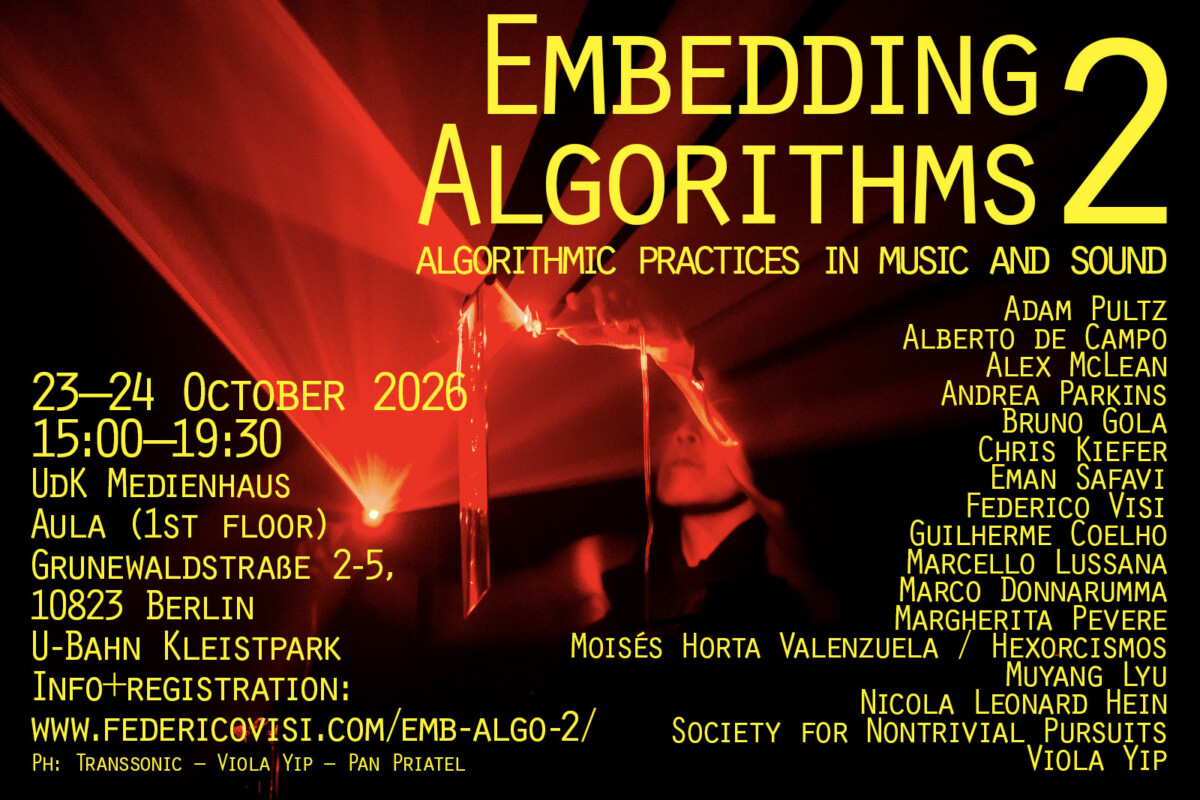
algorithmic practices in music and sound
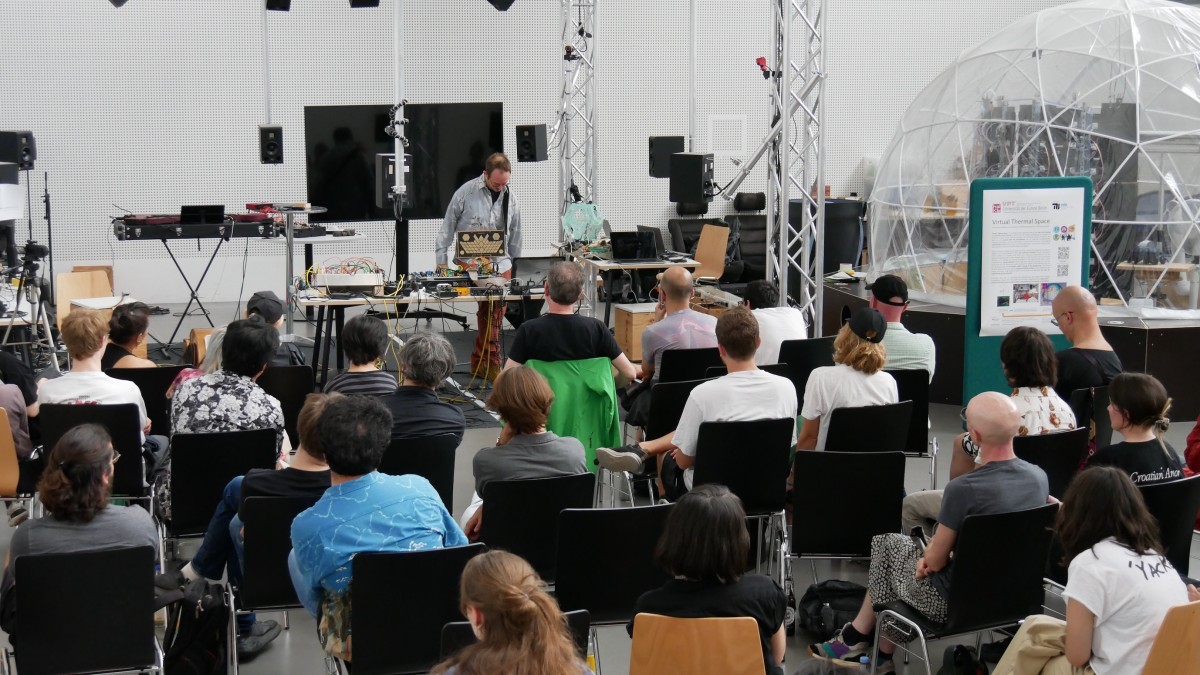
Embedding Algorithms 2 brings together artists, musicians, and researchers whose work places algorithms at the core of sonic practice. Over two afternoons at UdK Medienhaus, talks and performances will look at how machine learning models, live-coded patterns, biological data, analogue artificial neurons, and feedback circuits become part of how we build instruments, compose, perform, and listen. Topics range from neural audio synthesis and embodied machine learning to neuromorphic computing, art made with living organisms and genetic data, and the politics of training data, alongside spatial sound on the NTSS, a 30-loudspeaker system housed at the Medienhaus.
The event follows the first Embedding Algorithms Workshop, held at Berlin Open Lab in 2024, and is organised by Federico Visi as part of the project Co-improvising with the Non-human, supported by the Musikfonds AI scholarship (STIP-5). It is kindly supported by the Medienhaus and the Generative Art / Computational Art class at Universität der Künste Berlin.
Admission is free and open to all.
The event will be live-streamed.
If you would like to attend, please register here to receive further information and receive the live streaming links for remote attendance: https://docs.google.com/forms/d/e/1FAIpQLSdge50bUWQwy3mhDmKh3HbjvV6bJ_gSGpMLh7xjrGT2lRqtWw/viewform?usp=publish-editor
Please register even if you plan to attend in person: it helps us estimate how many people to expect and organise the space accordingly.
When/Where
23—24 October 2026
15:00—19:30
UdK Medienhaus
Aula (1st floor)
Grunewaldstraße 2-5,
10823 Berlin
U-Bahn Kleistpark
Info+registration:
www.federicovisi.com/emb-algo-2/
Participants
Adam Pultz
Alberto de Campo
Alex McLean
Andrea Parkins
Bruno Gola
Chris Kiefer
Eman Safavi
Federico Visi
Guilherme Coelho
Marcello Lussana
Marco Donnarumma
Margherita Pevere
Moisés Horta Valenzuela / Hexorcismos
Muyang Lyu
Nicola Leonard Hein
Society for Nontrivial Pursuits
Viola Yip
Short summaries
Adam Pultz
Machine Temporalities: The aesthetics and politics of decelerated machine learning
Since the deep learning revolution in 2012, model size and compute power have followed an exponential growth curve, a feature echoed in the socio-political domain through the fascinating and disturbing project of accelerationism. In this talk I discuss how the artistic use of decelerated machine learning may trouble accelerationist ideology and present a way of speculatively imagining futures beyond technocapitalism.
Alex McLean
Non-scribal algorithmic music
Algorithmic music can feel like abstract, ‘paper rhythms’, which unlike instrumental music, can feel unrelateable to movements of the body. In this talk/performance I’ll share how learning some of the algorithmic patterns underlying traditional South Indian rhythms have grounded my live coding practice, and informed my development of technology around it. I will also reflect on the liveliness of ‘non-scribal’ music culture, and what live coding culture could learn from it.
Andrea Parkins
“The Stray”: Diffusing Dis-location with the NTSS
Andrea Parkins will present an excerpt from “The Stray (Variation 4)”, her electroacoustic composition through which she highlights and implicates correspondences (or ruptures) that take place between gesture, sound and space; and embodied tensions between attempt and fluency. Parkins’ composition draws on Julia Kristeva’s psychoanalytic writing on abjection and the sublime, evoking the subjectivity of a migratory, dislocated (and sounding) body: a “stray”. For “Embedding Algorithms” Parkins will work together with Alberto de Campo and Bruno Gola to diffuse her composition on the NTSS (a non-trivial sound system).
Bruno Gola
Neuromorphic Synthesis
Inspired by the work of David Tudor and Forrest Warthman and the field of Neuromorphic Computing, “Neuromorphic Synthesis” investigates the history and speculates on the future of computation and Artificial Intelligence by means of experimental music, looking at modular systems as a hybrid analog/digital computing system. A central piece of this ongoing artistic research project is the Memristor, an electronic component currently used in research for analog neural networks, overcoming the limitations of the von Neumann architecture. By exploring feedback matrices using Memristors for the weights, signal flow isn’t only affected by the circuits but it also alters the material and the behavior of the circuits itself.
Bruno Gola, Alberto de Campo, S4NTP
NTSS – A Nontrivial Sound System
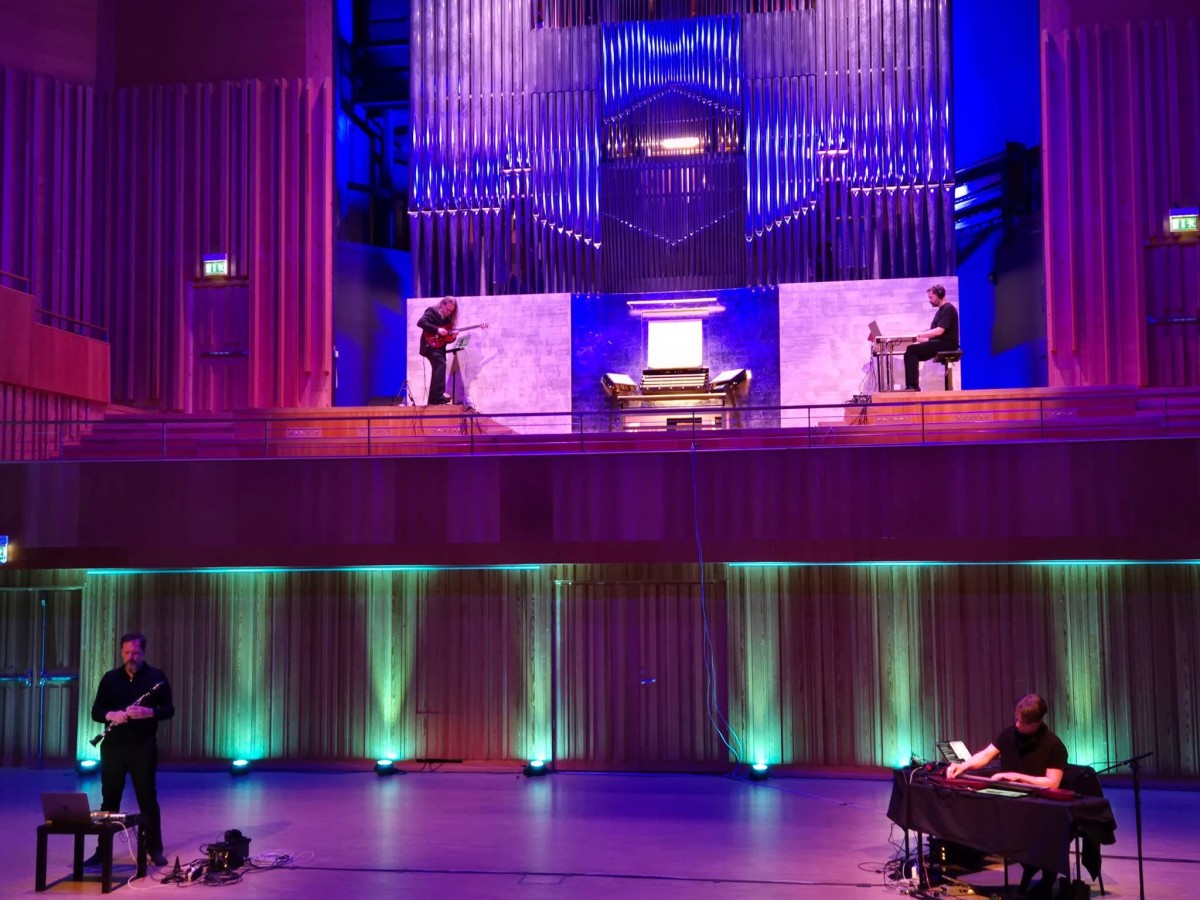
NTSS is a NonTrivial Sound System that understands spatialisiation as a rich resource for improvised performances: it offers a diversity of loudspeaker sound colors; multiple input sources can be sent on spatial orbits defined by a variety of algorithms; the parameters of these orbits can be informed by machine listening; and it is polyphonic: multiple performers can play their layers of fully spatialised sound into the NTSS simultaneously.
It consists of 30 loudspeakers living at UdK Berlin Medienhaus. Speaker maps and panning algorithms can be adapted flexibly, which we did for a concert at Silent Green Kuppelhalle, and for a residency at Hosek Gallery Berlin. It is available as an open source SuperCollider library.
Chris Kiefer
MEMLNaut: a musical instrument for exploration of musically embodied machine learning
MEMLNaut is a musical instrument and research platform for exploration of musically embodied machine learning. It can process and generate sound and optimise and run machine learning models on it’s dual core microcontroller chip. MEMLNaut is part of an investigation into the musically expressive potential of machine learning (ML) when embodied within physical musical instruments. It proposes ‘tuneable ML’, a novel approach to exploring the musicality of ML models, when they can be adjusted, personalised and remade, using the instrument as the interface.
Eman Safavi
Watermarking the training data of generative audio models: forensic detecability or a matter of intellectual property
When artists’ audio recordings enter generative AI training datasets, questions of consent, attribution, traceability and control become entangled with model architecture as well as datasets used for the training and fine tuning process. Previous studies have demonstrated successful watermarking, including model-integrated approaches such as DualMark. My thesis investigates a different possibility: can artists mark their recordings once and retain provenance without depending on AI developers? Experiments with AudioSeal and Stable Audio Open in my experiments show that source-level watermarks disappear during representation learning. These findings reframe artist protection as a sociotechnical challenge involving architectural accountability, transparency, and enforceable data governance. The presentation will be a walk through of my experiments, prototypes, hypothesis and discussions.
Federico Visi
Embedding algorithms in the electroacoustic feedback loop and co-improvising with the non-human
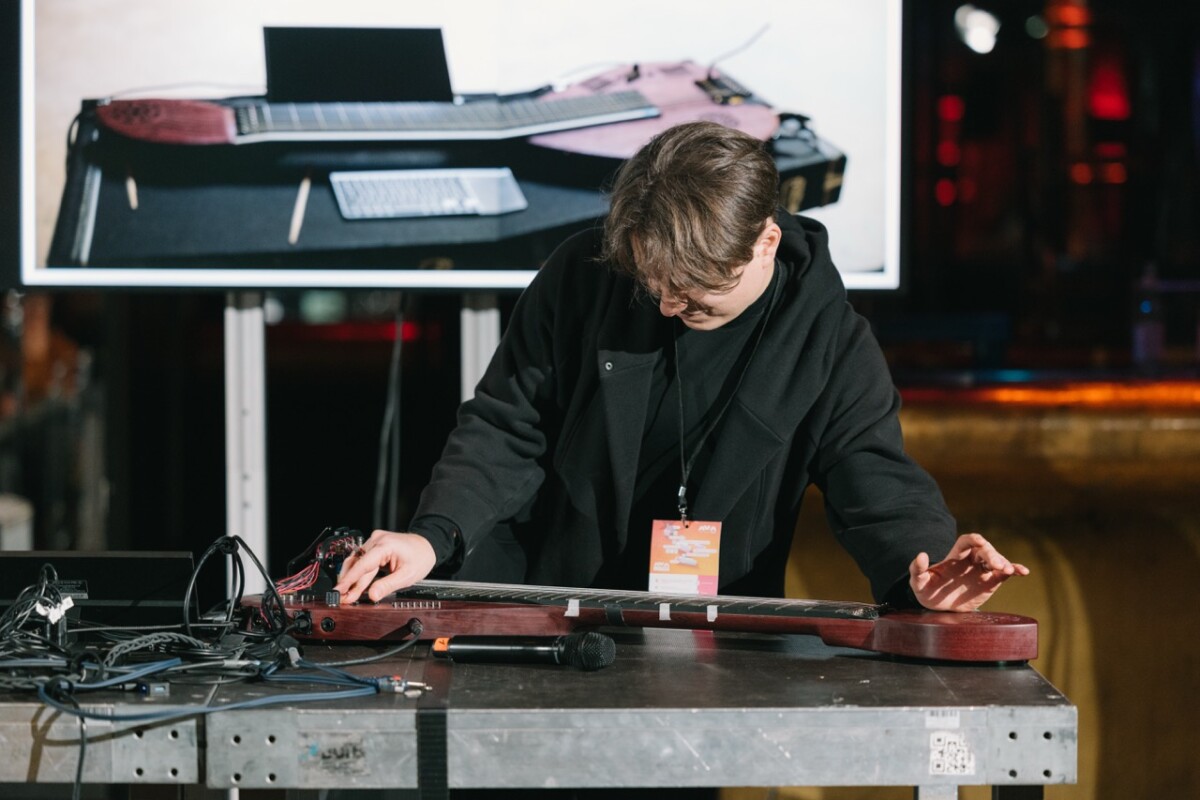
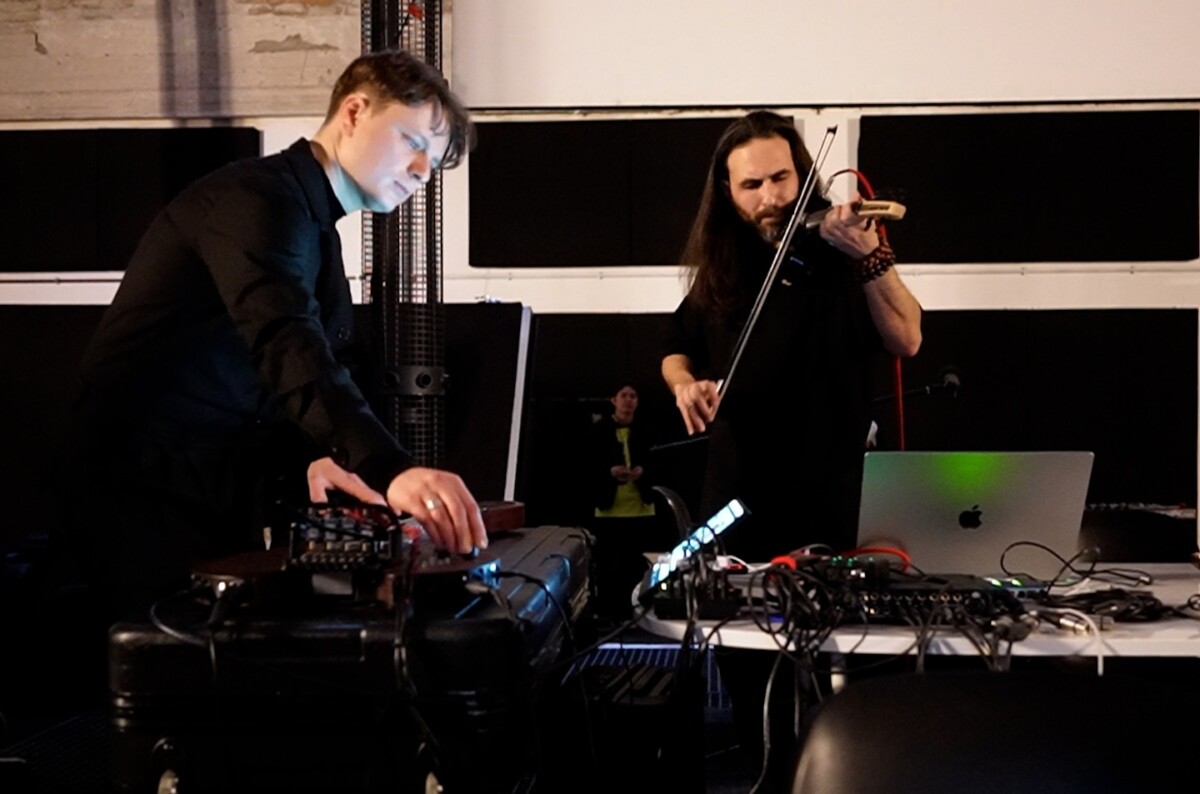
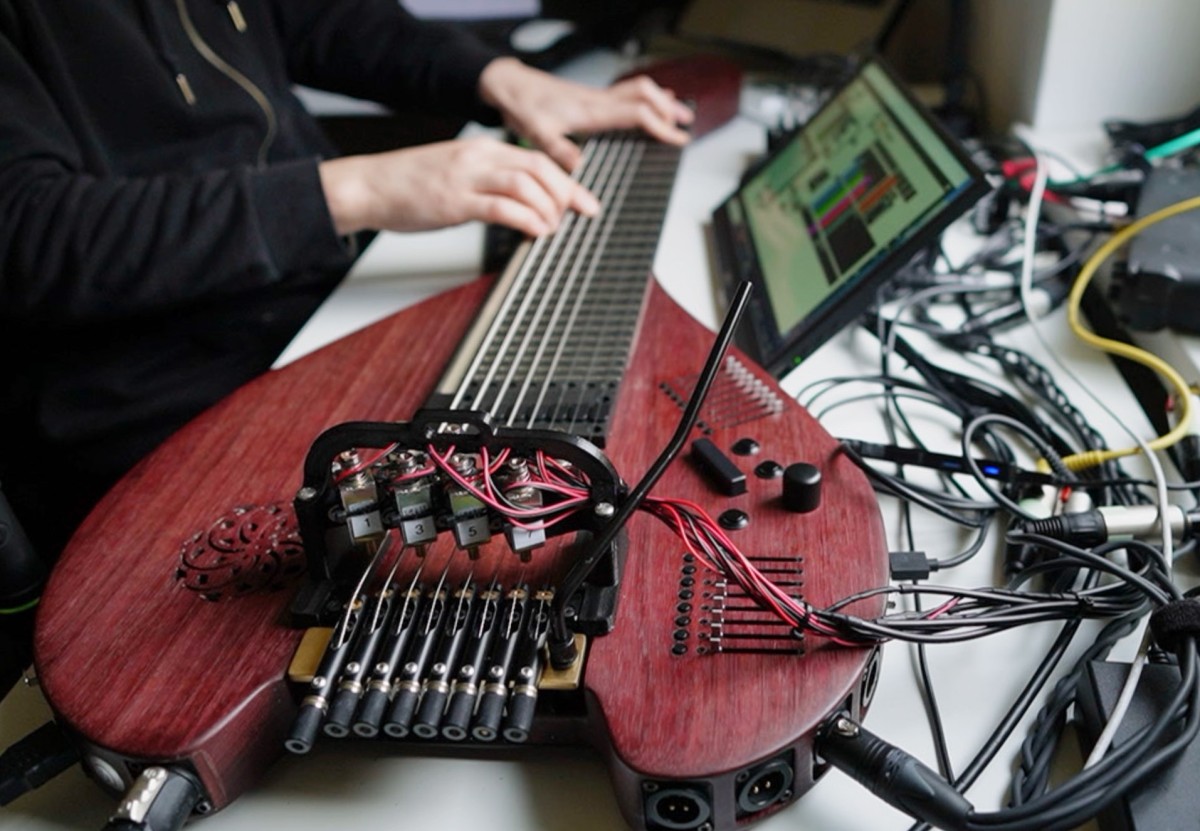
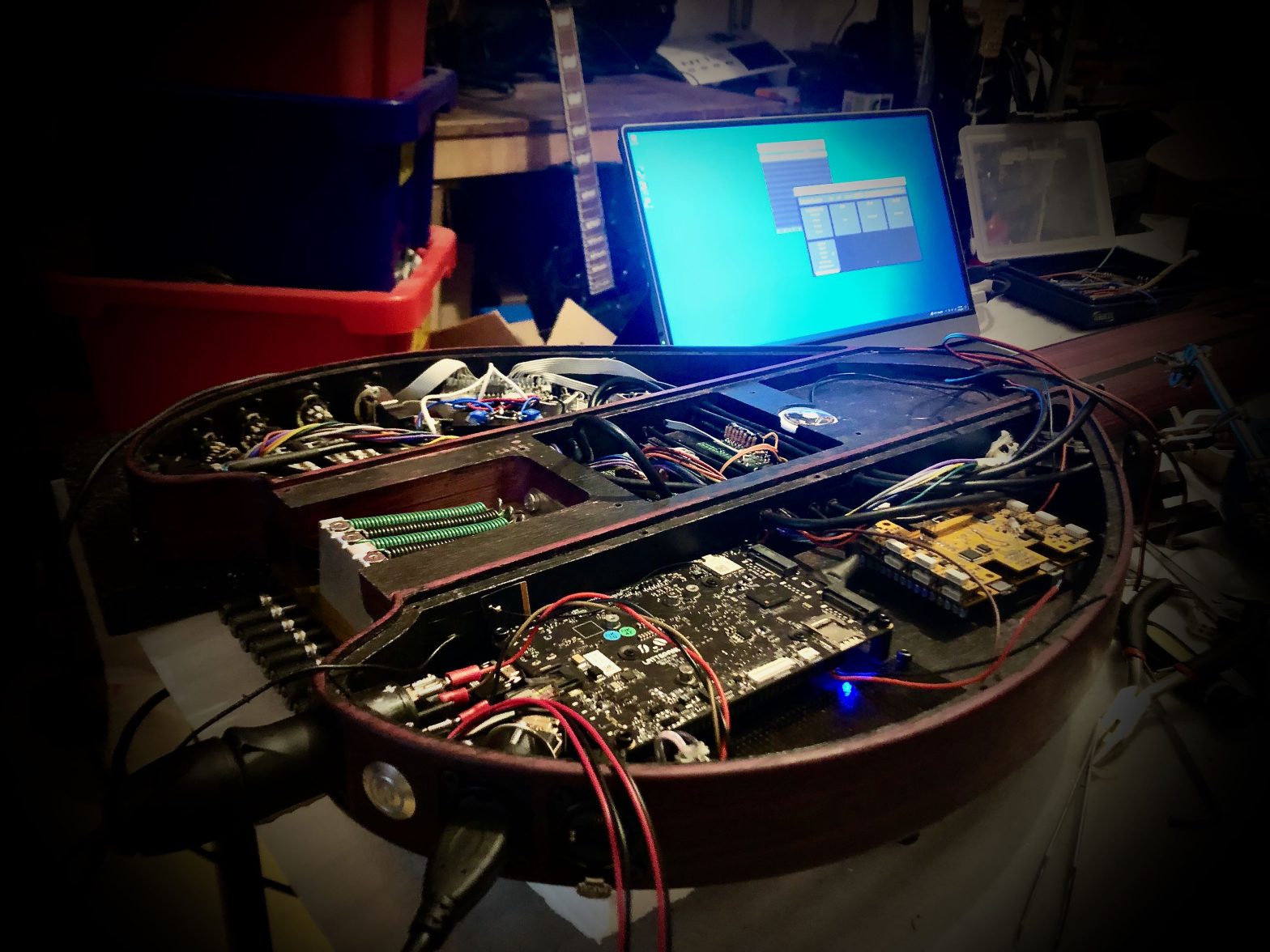
After a brief account of my project Co-improvising with the Non-human, I perform with the Sophtar, a feedback string instrument with an embedded computer. Somax2 agents from IRCAM and musically embodied machine learning (MEML) algorithms from the Emute Lab at the University of Sussex run inside the instrument, acting on its electroacoustic feedback loop and electromechanical actuators. Machine and human listen to the strings and act on them, sharing the same vibrating material, and improvise through a single physical system. The session closes with a first glimpse of the NHÉs, a swarm of non-human entities that emit and sense sound and light.
Guilherme Coelho
Towards Latent Synthesis: Prompting, Remixing and Blending with Text-to-Audio AI
This session explores particular approaches to working with text-to-audio AI systems such as Suno and Udio, with a focus on the creative potential of latent synthesis. Through incongruent intersemiotic prompt combinations, cross-materialism, and the remixing and blending of input audio, I show how these systems can be pushed beyond their conventional outputs towards idiosyncratic, emergent sound objects. We will listen to these strange hybrids and consider what sonic materialities, modes of synthesis and musical imaginaries they make possible.
Marcello Lussana
Towards Automatic Assessment of the Restorative Potential of Soundscapes
Evaluating the mental restoration potential of soundscapes is an active field of research, with solid findings but also open questions. While most research on restoration has focused on the visual aspects of environments, soundscape studies have also addressed this issue. However, there is no clear consensus on which auditory features play an important role.
This presentation outlines ongoing work on fine-tuning Stable Audio Open using pleasantness ratings to teach a machine to recognize pleasant soundscapes.
Marco Donnarumma
AI Prosthetics and Sonic Organs
In a world of social bubbles, immediate gratification and geopolitical upheaval, sound in art can help establish new ways of acknowledging the ‘other’, a first step towards a renewed mutuality. In this talk, Marco will focus on his latest series of works, I Am Your Body, an ongoing collection of performances and installation that leverage participative research to explore Deaf perception of sound as a means for new artistic aesthetics. Computational and prosthetic technology plays a crucial role in these works, but rather than being passive media, they are subverted and transformed into machines that act as new organs for a shared perception.
Margherita Pevere
Ode
Ode imagines urban ponds as spaceships undertaking a mission that, concealed by their apparent stillness, remains enigmatic to humans. Interconnected elements, inspired by the anatomy of pond organisms, shape a contemplative microcosmos. By combining bioinformatics with living samples from Berlin urban ponds, music, sculptural glass, garments, and sound objects, the artwork summons the liveliness of the spaceships. Pevere envisioned the spaceship concept during fieldwork with POUNDER researchers, who sample pond waters to extract genetic data of bacteria inhabiting them (also known as environmental DNA metabarcoding). Ode manifests actual genetic material and datasets from Berlin ponds as a multidimensional repository of ecological relationships and (im)possible adaptations to contaminants.
Moisés Horta Valenzuela / Hexorcismos
Building Unheard Music Instruments: Design Methodologies for Independent AI Music R&D
This performance lecture examines how SEMILLA.AI Studio bridges machine learning research and electronic music practice. Unpacking the end-to-end engineering of real-time neural audio instruments, we detail dataset curation, custom model training, and mapping latent spaces for live performance environments. The session demonstrates how independent computer musicians construct sovereign sonic architectures, concluding with a performance using SEMILLA.AI v2, NEBULA and in-development instruments.
Muyang Lyu
A Media Archaeology of Primitive Analog Neurons
A synthesizer prototype on breadboards, whose circuit is inspired by early artificial neurons in analog perceptrons and by LIF neuromorphic computing based on OTAs and Op Amps. Rather than conforming to conventional categories of musical instruments, the aim is to reflect on the historical epistemology embedded in technology, to question the choice of artistic apparatus between professional ready-made and amateur DIY approach, and to explore a messy but playful reuse and misuse of obsolete techniques from a super-low level.
Viola Yip and Nicola Leonard Hein
FO2: A Wearable Optoelectronic Laser-Feedback Instrument – Performing body-space-technology entanglements
In “Fluid Ontologies”, Transsonic (Nicola Leonard Hein and Viola Yip) continues to expand their intermedial artistic practice in performances. For this work, they further develop their DMI “FO2”. It is an optoelectronic laser-feedback instrument that uses laser modules as sound sources and a solar panel as a microphone, creating audiovisual feedback loops that generate images and sound using the same optoelectronic mechanism. Fluid Ontologies explores and defines new concepts of the instrumentality of light in audio circuits, putting space, body, technology, and instruments into one dynamic feedback system, exploring forms of cybernetic and transmedial modes of listening, as well as the emerging dances of agency.